
Hanuman Ansh is a 2026 Hindi devotional biographical film inspired by the early life and spiritual journey of Neem Karoli Baba. Written and directed by Vishal Chaturvedi, the film stars Shobhinaw Satyaa as the young spiritual teacher and became a rare audience-led theatrical success after an exceptionally quiet start.
Its box-office transformation is almost as striking as its production story. Satyaa joined the film as a second assistant director, not its leading man. When the original actor became unwell, Chaturvedi conducted an extended screen test and placed a crew member at the center of the film. A month after release, trade reports estimated that the modestly budgeted movie had earned more than ~₹132.13 crore (approx.) net and ~₹156.20 crore gross collection in India.
Key Takeaways
- Hanuman Ansh opened in India on August 7, 2026, and runs for approximately 150 minutes.
- The story dramatizes the early spiritual journey of Lakshman Narayan Sharma, later known as Neem Karoli Baba or Maharaj-ji.
- Shobhinaw Satyaa moved from the direction team to the lead role after the original actor fell ill.
- Reports place the film’s budget between ₹1.8 crore and ₹2 crore.
- The Indian Express reported a ~₹132.13 crore India net total after 31 days, based on industry tracking.
- Uttarakhand announced tax-free status for the film after Chief Minister Pushkar Singh Dhami watched it in Dehradun.
- A sequel is in development, and the project was conceived as a trilogy.
Hanuman Ansh Movie Overview
| Detail | Information |
|---|---|
| Title | Hanuman Ansh |
| Genre | Biographical devotional drama |
| Language | Hindi |
| Release date | August 7, 2026 |
| Running time | Approximately 150 minutes |
| Writer and director | Vishal Chaturvedi |
| Lead actor | Shobhinaw Satyaa |
| Reported budget | ₹1.8–₹2 crore |
| India net collection | ~₹122.13 crore after 31 days |
| Distributor in India | Cinépolis India, with Panorama Studios handling the Delhi–UP circuit |
| Overseas distribution | Hombale Films |
| Sequel | Confirmed to be in development |
What Is Hanuman Ansh About?
The plot follows Lakshman Narayan Sharma before he becomes widely known as Neem Karoli Baba. Grief shapes the opening of his journey. After losing his mother, the young Lakshman leaves home with a childlike but profound aim: to find the divine and reunite with the love he has lost.
His search takes him across North and western India. He lives with little, meditates in nature and encounters people who test his detachment and faith. The narrative also dramatizes the famous railway episode associated with Neem Karoli Baba: after he is removed from a train for traveling without a ticket, the train reportedly refuses to move until officials invite him back. The story connects that episode with the place later known as Nib Karori railway station.
The movie is not structured as an exhaustive, date-by-date biography. Chaturvedi instead uses selected episodes to examine grief, surrender, devotion, compassion and service. India Today reported that the director deliberately avoided a conventional hero-versus-villain structure and used a grandfather telling stories to his grandson as a narrative bridge.
Is Hanuman Ansh Based on a True Story?
Yes, This film is inspired by the life, teachings and stories associated with Neem Karoli Baba. It draws partly from Chaturvedi’s book Divine Detour: That Changed My Life and from accounts he collected during years of research.
That makes Hanuman Ansh a biographical interpretation rather than a documentary record. Spiritual traditions often preserve events through oral testimony, devotional literature and personal memory. Viewers should distinguish the film’s faith-based storytelling from independently documented history.
The Real Story and Global Legacy of Neem Karoli Baba
Hanuman Ansh draws its spiritual foundation from the life and teachings of Neem Karoli Baba, the revered Hindu saint affectionately called Maharajji by his followers. Although India has produced countless spiritual teachers, his approach stood apart for its simplicity. He did not build his public identity around elaborate sermons, personal publicity or a religious empire. Instead, devotees remember him wrapped in a blanket, speaking informally with visitors and encouraging them to practise love, service and devotion.
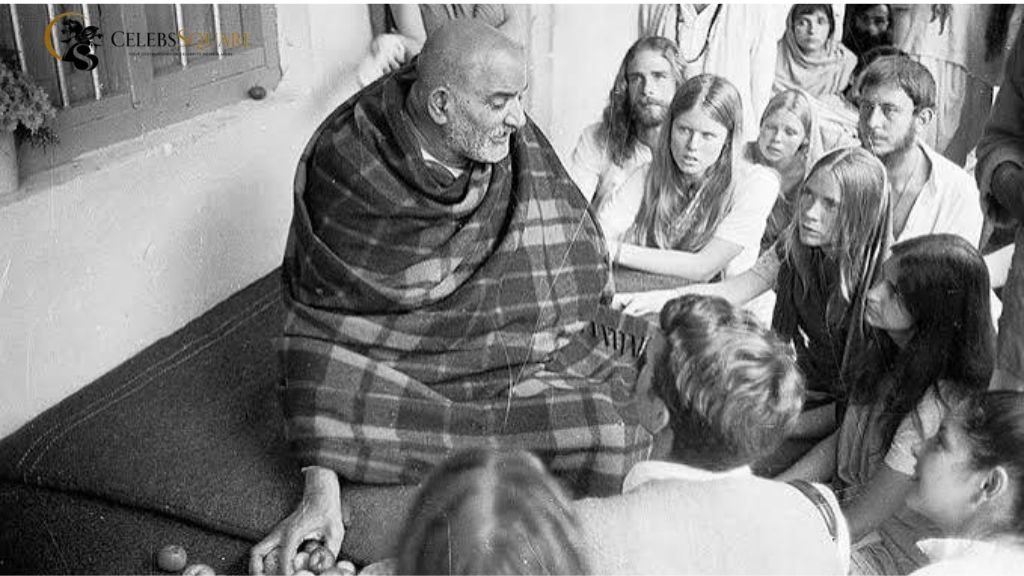
Neem Karoli Baba is widely believed to have been born as Lakshman Narayan Sharma around 1900 in Akbarpur, a village located in present-day Firozabad district, Uttar Pradesh. He married at a young age and later left home to pursue a spiritual life. However, unlike renunciants who permanently separated themselves from their families, he eventually returned and spent part of his life as a householder. He reportedly had two sons and a daughter.
Throughout his life, people addressed him by several names, including Lakshman Das, Neeb Karori Baba and Maharajji. Over time, the name Neem Karoli Baba became the most widely recognized version of his identity.
How Neem Karoli Baba Received His Famous Name
A popular story among devotees connects his name with a railway incident near the village of Neeb Karori in Uttar Pradesh. According to the traditional account, railway staff removed him from a train because he did not have a ticket. After he stepped off, the train reportedly refused to move despite repeated attempts to restart it.
The story says that railway officials eventually requested him to board the train again. Once he returned, the train started moving. Followers regard the incident as a miracle, while historical readers may view it as part of the oral tradition that developed around his life. Either way, the association with Neeb Karori became central to his public identity.
A Spiritual Message Built Around Love and Service
Neem Karoli Baba did not promote a complicated philosophical system. His teachings are commonly summarized through three interconnected principles: loving others, serving people and remembering God.
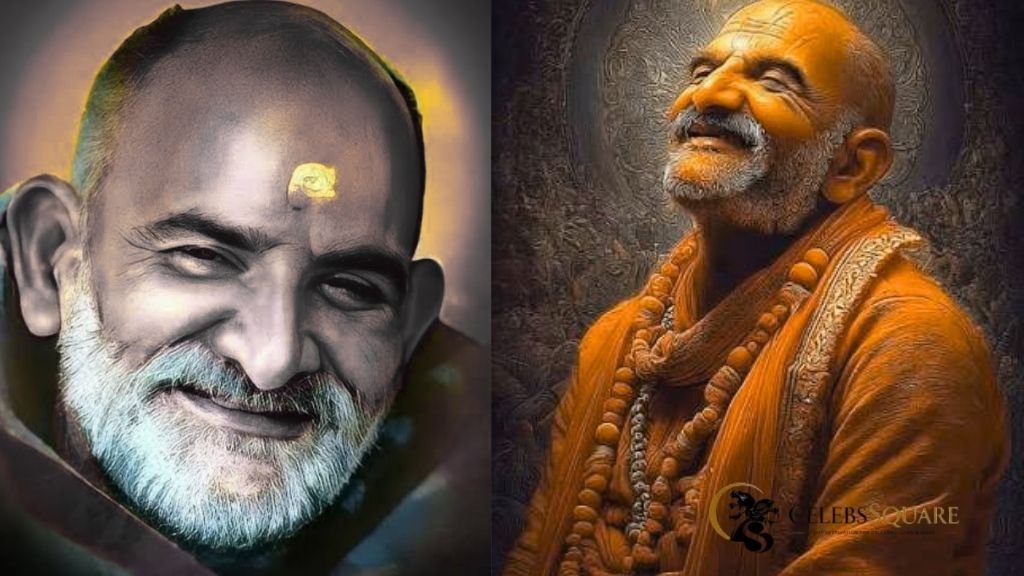
He was deeply devoted to Lord Hanuman, and Hanuman worship remains central to the temples and ashrams associated with him. However, his message extended beyond religious rituals. He encouraged followers to recognize the divine in other people and to treat practical service—especially feeding and caring for those in need—as a form of spiritual practice.
Visitors from different economic, religious and cultural backgrounds reportedly received the same welcome. Wealth, education and social status did not determine who could sit in his presence. Accounts from followers describe an unusually diverse community that included ordinary villagers, academics, public officials, foreign travellers and people struggling with difficult circumstances.
Food also held special importance in this tradition. Devotees frequently recall Maharajji insisting that visitors should not leave hungry. This emphasis transformed hospitality from an everyday gesture into an expression of compassion and devotion.
Ram Dass and the Journey of Maharajji’s Teachings to the West
Neem Karoli Baba’s international influence expanded significantly through Richard Alpert, an American psychologist who had taught at Harvard University. Alpert travelled to India during a period of personal and spiritual uncertainty after his controversial research with Timothy Leary ended his academic career at Harvard.
When Alpert met Neem Karoli Baba in India, the encounter changed the direction of his life. Maharajji gave him the name Ram Dass, meaning “servant of God.” Ram Dass later became one of the most influential interpreters of Indian spirituality for Western audiences.
His landmark book, Be Here Now, was published in 1971 and introduced many Western readers to meditation, yoga, devotion and spiritual awareness. The book became especially influential among people who were questioning materialism and conventional institutions during the cultural upheavals of the 1960s and 1970s.
Ram Dass did not simply present spirituality as an escape from ordinary life. Influenced by Maharajji, he treated service, compassion and mindful living as essential parts of spiritual development. Through his books and teaching, Neem Karoli Baba’s ideas travelled far beyond the Himalayan region.
Steve Jobs, Mark Zuckerberg and Jack Dorsey Inspired by Neem Karoli Baba
Neem Karoli Baba’s connection with modern technology leaders has become one of the most discussed aspects of his legacy. Apple co-founder Steve Jobs travelled to India in the 1970s while searching for spiritual direction. He hoped to learn more about Maharajji, but the saint had already died in 1973, so the two never met.
Several exaggerated stories later appeared online, including claims that Neem Karoli Baba personally gave Jobs a bitten apple that inspired Apple’s logo. Reliable evidence does not support these stories, and they should not be presented as established facts.
Mark Zuckerberg has also spoken publicly about visiting the temple associated with Neem Karoli Baba after Steve Jobs advised him to travel to India during a difficult period in Facebook’s development. This connection helped introduce Kainchi Dham to a new generation interested in the relationship between spirituality, leadership and technological innovation.
Kainchi Dham and an Enduring Spiritual Influence
Established near Nib karori Station, Nainital in 1964, Kainchi Dham, situated about 9 kilometers from Bhawali on Nainital-Almora Road. It became the best-known centre associated with Neem Karoli Baba. The ashram and Hanuman temple continue to attract visitors from India and abroad, particularly during the annual foundation-day gathering.
The contrast behind its popularity is striking. Neem Karoli Baba lived without the tools, wealth or public visibility associated with modern global influence. Nevertheless, his teachings reached entrepreneurs, writers, academics and spiritual seekers across continents.
Miracle stories remain an important part of how devotees remember him. However, his lasting importance does not depend entirely on whether every extraordinary account can be historically proven. His more tangible legacy lies in the communities he inspired, the people who embraced service because of him and the continued relevance of his teachings decades after his death.
This legacy also provides the emotional foundation of Hanuman Ansh. The film is not merely about the unexplained incidents associated with a saint; it explores the formation of a spiritual personality whose devotion to Hanuman, compassion for others and commitment to feeding the hungry affected people far beyond his immediate surroundings.
Neem Karoli Baba did not ask followers to abandon the world. Instead, his teachings encouraged them to engage with it differently—to make love visible through behaviour, treat service as a spiritual discipline and see human beings without the divisions created by wealth, religion or status. That simple message remains the most meaningful bridge between Maharajji’s life and the story presented in Hanuman Ansh.
Hanuman Ansh Cast
| Actor | Character |
|---|---|
| Shobhinaw Satyaa | Lakshman Das/young Neem Karoli Baba |
| Vihaan Shedge | Maharaj-ji as a teenager |
| Chandan Anand | Ram Nandan Bhosale |
| Anil Rastogi | Mahant-ji |
| Purnima Tiwari | Ram Dulari/Rambeti Sharma |
| Nikhil Dubey | Sudhi |
| Udaysinh Rajput | Banshidhar |
| Gulshan Pandey | Inspector Dharam Singh |
| Neha Paranjpe | Parvati |
| Mannish Chaudhary | Supporting role |
Some databases and reports vary in the spelling of character names. The final on-screen credits should take priority where discrepancies arise.
Shobhinaw Satyaa’s Unexpected Move From Crew to Lead Actor
The most distinctive production story concerns the lead actor. Shobhinaw Satyaa initially worked on Hanuman Ansh as its second assistant director and helped with props and other production duties. When the unnamed actor originally chosen for the central role became ill during the first schedule, stopping the shoot would have placed the small production under severe pressure.

Crew members had already noticed Satyaa’s resemblance to photographs of Neem Karoli Baba. More importantly, he knew the screenplay after participating in rehearsals. Chaturvedi tested him for more than four hours near Chitrakoot’s Mandakini River; other reports describe it as a five-hour audition. Satyaa’s handling of a scene reportedly convinced the director to cast him.
The episode explains why calling Satyaa an overnight discovery is incomplete. The casting decision was sudden, but his training and experience behind the camera had taken years to develop.
Where Was Hanuman Ansh Filmed?
Principal photography reportedly took place in November 2025, mainly around Chitrakoot, with additional filming in Mumbai. Locations in Chitrakoot supported sequences involving ashrams, the installation of a Hanuman idol and the construction of a cave connected to the narrative.
The location choice also supported the film’s visual identity. Chitrakoot carries strong associations with the Ramayana tradition, making its rivers, ghats and spiritual landscape relevant to a story built around devotion to Rama and Hanuman.
Some Interesting Shooting Incidents: Faith, Discipline and Filmmakers’ Experiences
Several stories from the production have circulated widely. They should be understood as accounts shared by the cast and filmmakers rather than independently verified supernatural events.
The camera problem and Hanuman Chalisa recitation
In interviews, the team described a day when technical problems reportedly stopped the camera from functioning for hours. They said the crew recited the Hanuman Chalisa and that work resumed afterward. The participants interpret the sequence through faith; an outside observer cannot establish whether the timing was miraculous or coincidental.
A devotional routine behind the camera
Chaturvedi has said that he followed a fruit-based diet for more than four months while preparing for the film. Reports also state that the production served vegetarian food on set and incorporated devotional practice into the working environment. These choices show how the team tried to align its conduct with the sacred subject, even though they do not prove the historical accuracy of every scene.
Years of research before filming
The director told India Today that his interest in the subject stretched back nearly two decades. Informal research began around 2009, became more systematic in 2016–17 and expanded again in 2022–23. He visited locations associated with Neem Karoli Baba, including Vrindavan, Akbarpur, Neeb Karori and Lucknow, and spoke with people connected to the tradition.
Hanuman Ansh Budget and Box-Office Collection
Hanuman Ansh reportedly had a production budget of approximately ₹1.8 crore to ₹2 crore. However, the filmmakers have not released audited production accounts, so these figures should be described as a reported budget rather than an officially confirmed cost.
The film opened with a modest collection but gained remarkable momentum through positive word of mouth. Here is its reported box-office performance:
| Box-office milestone | Reported performance |
|---|---|
| Opening day | ₹10 lakh India net |
| First week | ₹1.08 crore India net |
| Second week | ₹40 lakh India net |
| Third week | ₹10.40 crore India net |
| Day 24 | ₹40.13 crore cumulative India net |
| Fourth week | ₹61 crore India net |
| Day 30 | ₹99.38 crore cumulative India net |
| Day 31 | ₹122.13 crore cumulative India net |
| Day 32 | ₹132.13 crore cumulative India net |
| Day 33 (live estimate) | ₹134.83 crore cumulative India net |
| India gross through Day 33 | Approximately ₹159.39 crore |
As of September 8, 2026, at 3:03 p.m. IST, the film had earned an estimated ₹134.83 crore net in India. Its reported India gross—and therefore its currently tracked worldwide gross—stood at approximately ₹159.39 crore. The Day 33 figure included a live estimate of ₹2.70 crore and had not yet been finalized.
*The available tracker had not recorded any overseas collection at the time of this update. Box-office figures may change after final trade reports, producer data or overseas numbers become available.
Why did the film grow instead of collapse?
Most theatrical movies earn their largest numbers during opening weekend and decline afterward. Hanuman Ansh moved in the opposite direction. Its early run was limited, but audience recommendations and social-media clips encouraged exhibitors to add shows as demand increased.
Its growth reflects three reinforcing factors:
- An underserved audience: Mainstream Hindi cinema rarely offers a sincere devotional biography without presenting it as an action spectacle.
- Low initial awareness: A small opening left considerable room for discovery once positive recommendations began circulating.
- Communal viewing: Families, devotees and local groups treated some screenings as shared spiritual occasions, giving the movie a social function beyond ordinary entertainment.
This does not mean every reported rupee represents profit. Cinemas, distributors, taxes and other participants share theatrical revenue. Dividing box-office gross by the budget does not calculate the producers’ final return.
Uttarakhand Declares Hanuman Ansh Tax-Free
Uttarakhand Chief Minister Pushkar Singh Dhami watched the film in Dehradun on September 5 and announced that it would receive tax-free status in the state. He connected the decision to the film’s spiritual subject and Neem Karoli Baba’s association with Kainchi Dham in Uttarakhand.
Tax-free status can reduce the tax component of eligible cinema tickets after implementation, potentially lowering prices or supporting attendance. It does not mean every screening is free, and the practical saving depends on how the state and exhibitors apply the decision.
Public Reviews and Social-Media Reaction
The public response has been much stronger than the film’s limited early visibility suggested. Positive viewers frequently describe it as peaceful, emotionally affecting and suitable for family audiences. Shobhinaw Satyaa’s restrained performance, the devotional music and the natural locations receive repeated praise.
Social sharing appears to have played a material role in discovery. PVR INOX added shows during the fourth week as audience demand increased, while posts about the film spread across Instagram, YouTube and community discussions. Virender Sehwag and filmmaker Aditya Dhar were among the public figures reported to have expressed support.
The response is not universally positive. Some viewers argue that the movie feels episodic, moves slowly and works better as a devotional experience than as tightly structured cinema. Others question the dramatization of spiritual claims. These criticisms do not invalidate the film’s emotional effect, but they help viewers set realistic expectations.
Balanced review: Who is most likely to enjoy it?
Hanuman Ansh is most likely to connect with viewers interested in Neem Karoli Baba, devotional cinema, spiritual biographies and reflective family viewing. Audiences looking for fast pacing, spectacle or a conventional dramatic conflict may find its 150-minute running time demanding.
Its chief strength is sincerity. Its principal limitation is that reverence sometimes takes priority over narrative tension. Whether that feels moving or dramatically uneven will depend heavily on what the viewer expects.
Overseas Release and Expanding Audience
Hombale Films acquired the film’s international distribution rights, with an overseas release scheduled for September 11, 2026. The expansion will test whether the strong domestic word of mouth can translate to Indian diaspora markets and global followers of Neem Karoli Baba.
The film has a plausible international audience because Maharaj-ji’s influence extends beyond India. However, overseas box-office success should not be assumed before verified results become available.
Hanuman Ansh Sequel
Director Vishal Chaturvedi has confirmed that development of the second part is underway. The makers conceived Hanuman Ansh as the beginning of a trilogy, and the closing moments indicate that the story will continue.
The first installment covers Maharaj-ji’s early life and transformation. Reports say the next chapter will explore later periods and locations associated with Firozabad, Agra and Mathura. The sequel’s official title, complete cast, production schedule and release date have not yet been announced.
Why Hanuman Ansh Matters Beyond Its Collection
The easiest way to describe the film is as a low-budget blockbuster. Yet its more useful lesson concerns audience discovery. Marketing created limited initial awareness, but viewers gave the movie a second chance through recommendations. Exhibitors reacted to that demand rather than to a star-driven opening.
That pattern will be difficult to manufacture deliberately. Social-media attention does not automatically produce ticket sales, and faith-based subjects do not guarantee success. In this case, subject familiarity, perceived sincerity, family viewing and a scarcity of comparable films aligned at the right moment.
Final Verdict
Hanuman Ansh is an earnest devotional biography whose real-world journey became as compelling as the story onscreen. Its modest scale is visible, and its episodic structure will not satisfy every viewer. Nevertheless, its calm tone, spiritual focus and unlikely lead performance helped it reach an audience that larger releases often overlook.
The numbers may continue changing, but the central achievement is already clear: Hanuman Ansh turned a quiet release into a nationwide conversation without a conventional star, enormous budget or front-loaded opening.
If this guide helped you understand the story behind the film, share it with someone considering Hanuman Ansh and explore CelebsSquare’s related profile of Shobhinaw Satyaa.
FAQs About Hanuman Ansh
Hanuman Ansh, meaning “Fragment of Hanuman,” is a 2026 Indian Hindi-language biographical devotional drama. Dr Vishal Chaturvedi wrote, directed and produced the film under Swambhu Media Network. An Indian dramatizes the early life and spiritual transformation of Lakshman Narayan Sharma, who later became known as Neem Karoli Baba. It follows his journey through grief, devotion, travel and service.
Shobhinaw Satyaa plays the young Neem Karoli Baba. He initially joined the production as a second assistant director but won the role after the original lead became unwell and director Vishal Chaturvedi conducted an extended screen test.
Yes, Uttarakhand announced tax-free status for the film after Chief Minister Pushkar Singh Dhami attended a screening in Dehradun. The announcement applies to Uttarakhand, not automatically to every Indian state.
Yes, A sequel is officially in development as part of a planned trilogy. However, the filmmakers have not yet announced its release date, final title or complete cast.
Also Read: Shobhinaw Satyaa Biography: The Actor Behind Neem Karoli Baba in Hanuman Ansh

